

How to Start a Digital Products Business in India in 2026: A Beginner’s Guide
Have you ever wanted to start an online business without managing physical inventory, packing parcels, or worrying about shipping? Starting a digital products business in India could be an option worth exploring.
From eBooks and printable planners to website templates, spreadsheets, design resources, and educational guides, digital products can be created once and sold repeatedly. You can begin with a simple product, test whether people want it, and gradually build an online business around your skills and customers’ needs.
The best part? You do not necessarily need a large team or an expensive office to get started. You need a useful product, a clear target audience, a way to accept payments, and a plan to reach potential customers.
In this guide, you will learn how to start a digital products business in India, choose a product idea, set a price, sell online, market your products, and avoid common beginner mistakes.
What Is a Digital Products Business?
A digital products business sells downloadable or digitally delivered products instead of physical goods. Customers usually purchase these products online and receive access to a file, resource, template, course, or other digital content.
For example, a customer might buy a budgeting spreadsheet, download an eBook, access a design template, or purchase a collection of resources for their business.
Unlike physical products, digital products generally do not require you to maintain physical stock or arrange shipping for every order. However, you still need to invest time in creating quality products, marketing them, handling customer questions, and updating them when necessary.
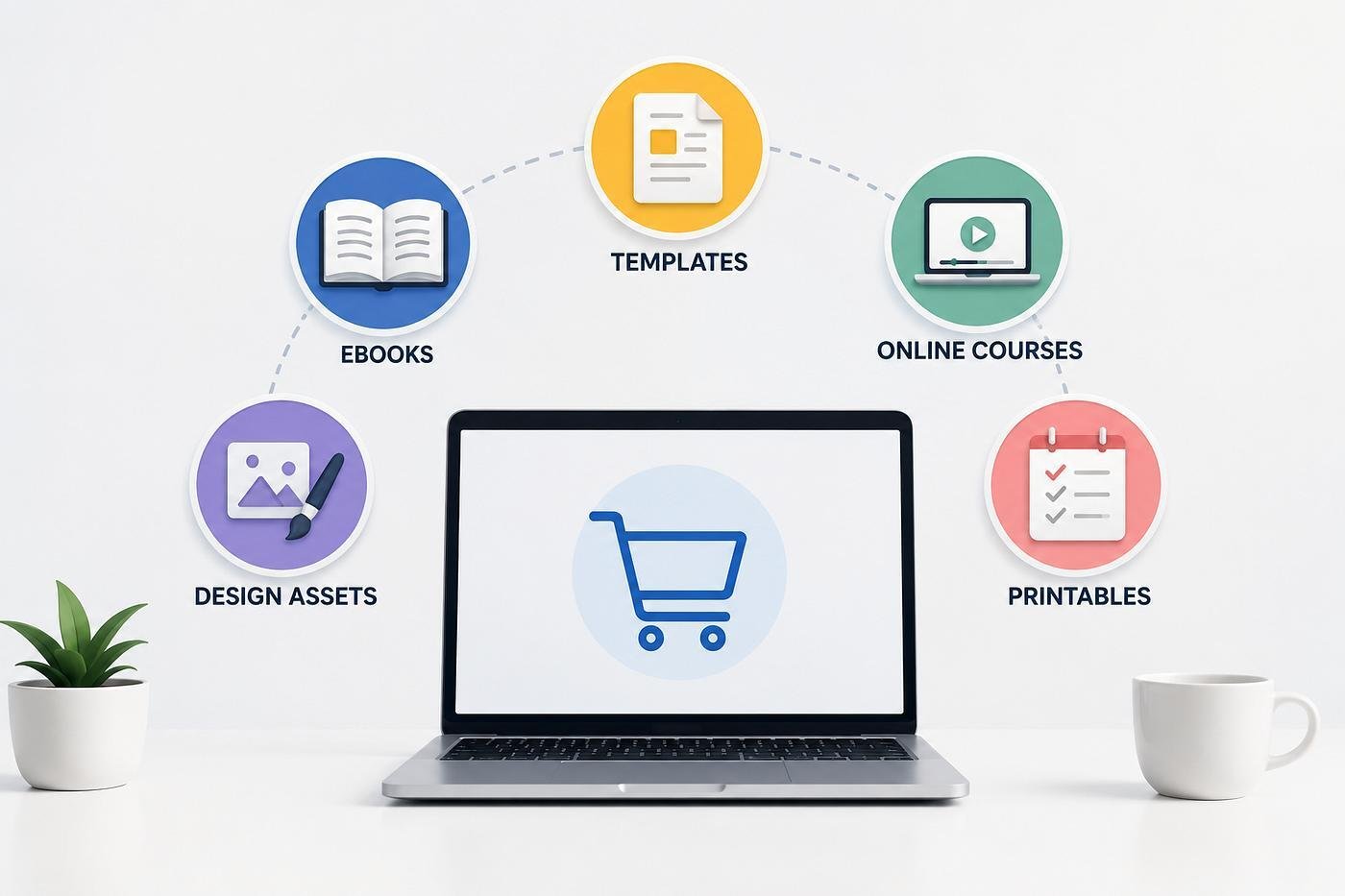
Examples of digital products you can sell
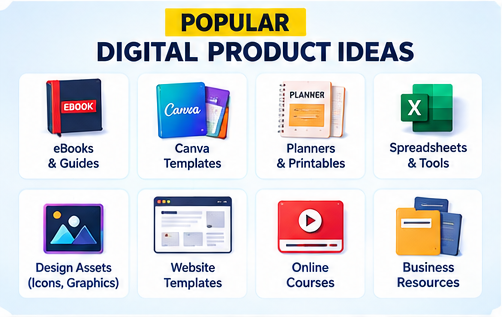
- eBooks and guides: Educational material, how-to guides, recipes, and business resources.
- Templates: Social media designs, business documents, presentations, and website templates.
- Planners and printables: Daily planners, study schedules, habit trackers, and worksheets.
- Spreadsheets: Budget planners, expense trackers, inventory sheets, and business calculators.
- Digital design assets: Icons, graphics, fonts, backgrounds, and other licensed creative resources.
- Online courses and tutorials: Lessons that teach a practical skill.
- Business resources: Checklists, workflow documents, marketing calendars, and ready-to-use planning tools.
Choose products that solve a specific problem for a clearly defined audience. A useful, focused product is often easier to explain and market than a large collection of unrelated files.
Why Start a Digital Products Business in India?
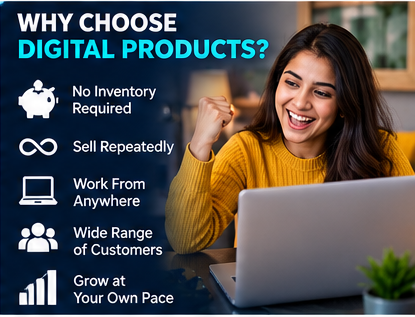
India has a growing online audience, and digital tools make it possible for individuals and small businesses to create and sell resources online. You can explore this model without committing to physical inventory at the beginning.
Here are some potential advantages.
1. Lower physical inventory requirements
You do not need to manufacture, store, or ship a physical product when selling a downloadable file. Your main costs may include product creation, software, website hosting, payment processing, marketing, and customer support.
Lower inventory requirements do not mean the business is completely free to operate. Plan your expenses before launching.
2. The potential to sell repeatedly
Once a digital product is ready, the same product can be sold to multiple customers. This can make delivery more efficient, particularly when your website supports automated payments and downloads.
You will still need to promote the product, provide support, and improve it based on customer feedback.
3. Flexible working arrangements
You can work on your digital products from home, a shared workspace, or almost anywhere with a reliable internet connection. This flexibility may suit students, freelancers, working professionals, and people exploring entrepreneurship alongside other responsibilities.
4. Opportunities to serve different customer groups
Digital products can serve many types of customers, including students, content creators, freelancers, teachers, job seekers, and small business owners.
The key is to understand the specific needs of your chosen audience rather than trying to sell everything to everyone.
Step 1: Choose a Profitable Digital Product Idea
One of the most important decisions is choosing what to sell. Start with a problem your target customer wants to solve, then create a digital product that helps them solve it.
For example, a small business owner may need social media templates, while a student may want a revision planner. A freelancer may need a quotation template, and a family may benefit from a monthly budget spreadsheet.
Digital product ideas for beginners in India
| Product idea | Target audience | Problem it can solve |
|---|---|---|
| Social media templates | Creators and small businesses | Creating content more efficiently |
| Budget spreadsheet | Individuals and families | Tracking income and expenses |
| Study planner | Students | Organising study sessions |
| Business starter checklist | New entrepreneurs | Planning basic business tasks |
| eBook or practical guide | Learners and professionals | Learning a specific skill |
| Website templates | Freelancers and business owners | Starting a website more efficiently |
| Printable worksheets | Parents and teachers | Supporting structured learning |
| Marketing calendar | Small businesses | Planning regular promotional content |
These are potential product ideas, not guaranteed bestsellers. Actual demand depends on the audience, product quality, pricing, competition, and marketing.
How to validate your product idea
Before spending weeks creating a product, take these steps:
- Identify the customer. Be specific about who is likely to buy your product.
- Research the problem. Read search results, customer reviews, online discussions, and questions people ask in your niche.
- Study competing products. Look at their features, presentation, prices, and customer feedback.
- Create a small first version. Start with one useful template, guide, or resource instead of building a large bundle immediately.
- Ask for feedback. Show the product to potential customers and improve it before investing heavily in advertising.
A good product idea combines a clear customer need, a useful solution, and a realistic way to reach buyers.
Step 2: Define Your Target Audience
Your target audience influences almost every business decision, including product design, pricing, content marketing, and advertising.
For example, a social media template designed for a professional marketing agency may look very different from one designed for a local bakery or an individual creator.
Instead of saying, “My products are for everyone,” define your audience more precisely.
You could target:
- Students: Study planners, revision schedules, and educational resources.
- Content creators: Social media templates, content calendars, and creative assets.
- Freelancers: Proposal templates, client onboarding documents, and productivity tools.
- Small business owners: Marketing resources, business trackers, and ready-to-use templates.
- Aspiring entrepreneurs: Business planning guides, checklists, and beginner-friendly resources.
Start with one audience and learn what it needs. You can expand into related categories once you understand your customers better.
Step 3: Create a High-Quality Digital Product
Your product should deliver the result promised on its sales page. Attractive graphics can help a product stand out, but usefulness, accuracy, ease of use, and clear instructions are equally important.
Here is a simple process for creating your first digital product.
A beginner-friendly product creation workflow
1. Outline the solution. Write down what the customer should be able to do after using your product.
2. Create the content. Use appropriate tools such as document editors, spreadsheet software, or design applications.
3. Make it easy to use. Organise files clearly, use readable formatting, and include instructions wherever needed.
4. Check quality. Review spelling, links, calculations, formatting, compatibility, and any claims made in the product.
5. Prepare a preview. Create product images or sample pages so customers understand what they will receive.
6. Package the files. Use suitable formats such as PDF, XLSX, or ZIP, depending on the product and its intended use.
7. Test the customer experience. Open the files on different devices where practical and make sure customers can access them without unnecessary difficulty.
Can you use AI tools to create digital products?
AI tools can assist with brainstorming, outlining, drafting, research organisation, design ideas, and workflow automation. However, you should review and improve AI-assisted content before selling it.
Check facts, remove repetitive material, add practical examples, and make sure the final product provides genuine value. Also review the relevant software terms, licensing conditions, and intellectual property requirements before using or reselling any assets.
Do not assume that an image, template, font, or other resource found online is automatically permitted for commercial resale.
Step 4: Decide How to Sell Your Digital Products Online
Once your product is ready, choose how customers will discover it, pay for it, and receive it.

Option 1: Sell through your own website
A dedicated online store gives you more control over product pages, branding, pricing, customer experience, and content marketing.
Your website should ideally include:
- Clear product descriptions and benefits.
- Product previews and accurate file details.
- Transparent pricing and payment information.
- A reliable checkout process.
- Instructions for accessing purchased files.
- Contact information and customer support details.
- Appropriate terms, privacy information, and refund or cancellation policies.
If you already have an online store, you can organise products into relevant categories and publish educational blog posts that help potential customers discover them.
Option 2: Use a digital selling platform
A digital selling platform may provide product hosting, checkout facilities, file delivery, or other selling tools. Compare its fees, payment methods, supported countries, delivery features, and terms before choosing one.
This may be useful if you want to validate a product idea before investing in a more customised website.
Option 3: Use social media to attract buyers
Instagram, YouTube, Facebook, and other suitable platforms can help you introduce your products to potential customers.
For example, a creator selling content templates could publish a short tutorial showing how a business can plan a week of posts. The content demonstrates the problem and gives viewers a reason to explore the paid resource.
Social media can support your website, but you should make the purchase process clear and keep customer communication professional.
Step 5: Set the Right Price for Your Digital Product
Pricing is not simply about choosing the lowest possible amount. It should reflect the product’s usefulness, quality, scope, target audience, and the cost of running your business.
For a simple spreadsheet, checklist, or small template pack, you might test a lower introductory price. A detailed guide, specialised resource, or comprehensive template bundle may justify a higher price if it provides additional value.
Example: Understanding digital product revenue
Suppose you sell a digital product for ₹199.
| Sales in a month | Gross revenue |
|---|---|
| 10 sales | ₹1,990 |
| 50 sales | ₹9,950 |
| 100 sales | ₹19,900 |
These figures are examples, not earnings forecasts. They represent gross revenue before payment processing fees, applicable taxes, refunds, advertising, software, and other expenses. Sales are not guaranteed.
A practical pricing strategy
- Research comparable products in your niche.
- Make the product’s benefits and contents clear.
- Consider an introductory offer to test demand.
- Avoid discounting so heavily that the business becomes unsustainable.
- Review customer feedback, conversion rates, and actual costs before changing prices.
You can also offer related products as a bundle when they solve connected problems, rather than combining unrelated files just to increase the number of items.
Step 6: Set Up Payments and Automatic Digital Delivery
A smooth buying experience can help reduce confusion and support requests. Customers should understand what they are purchasing, how much it costs, and how they will receive it.
Depending on your website and payment provider, you may be able to accept supported methods such as UPI, cards, or net banking.
Before launching, test the complete process:
- Open the product page.
- Review the product description and price.
- Complete a test purchase using your platform’s supported testing method.
- Check the order confirmation.
- Verify that the download link or access instructions work.
- Confirm that customers can contact you if they experience a problem.
Use a payment provider that supports your business requirements and follow its onboarding and verification procedures.
For tax registration, invoicing, consumer obligations, and other compliance matters, check the rules applicable to your business, sales channels, and customer locations. Requirements can vary depending on your circumstances, so seek advice from a qualified professional when necessary.

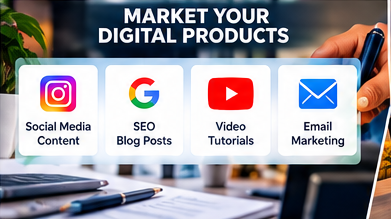
Step 7: Market Your Digital Products
Creating a good product is only part of the process. Potential customers need a way to discover it, understand its value, and trust your store.
For beginners, a combination of useful content, search engine optimisation, social media, and customer feedback can provide a practical starting point.
1. Use SEO to attract relevant search traffic
Search engine optimisation, or SEO, helps search engines understand your pages and helps potential customers find relevant content.
Start by researching what your target audience wants to learn. If you sell business templates, for example, useful topics could include business planning, social media marketing, productivity, or organising business finances.
Create helpful articles that answer these questions and link naturally to relevant products.
SEO basics include:
- Write a descriptive page title.
- Use one clear main heading and logical subheadings.
- Include relevant search terms naturally.
- Write a useful meta description.
- Use descriptive URLs.
- Add meaningful image alt text.
- Link to relevant products and related articles on your website.
- Make the website mobile-friendly and easy to navigate.
Do not repeat keywords unnaturally or publish articles solely to target search phrases. Helpful content that addresses the reader’s actual question is a better foundation for sustainable search visibility.
2. Publish educational social media content
Show potential customers how your product helps solve a problem.
For example:
- A budget spreadsheet seller could demonstrate how to organise monthly expenses.
- A template seller could show a before-and-after content design.
- A study planner seller could share a practical weekly revision routine.
- A business resource seller could explain a common beginner mistake.
Your content should provide value even when someone does not purchase immediately. Include a relevant call to action for readers who want a more complete solution.
3. Build trust with clear product information
Customers should not have to guess what they will receive.
Show product previews, list included files, explain compatibility requirements, and clearly state any usage restrictions. If you offer customer support or updates, describe those services accurately.
Use genuine customer reviews only when you have permission to publish them. Do not invent testimonials, sales figures, or claims about product results.
4. Test paid advertising carefully
Advertising on suitable platforms can help you reach a defined audience, but it also involves financial risk.
Before increasing your budget, test whether the product page converts visitors into customers. Track advertising costs, purchases, refunds, and the revenue remaining after expenses.
Start with a budget you can afford to lose while testing. Do not assume that more website traffic automatically means more profit.
Step 8: Track Performance and Improve Your Business
Once your digital products are available, use actual results to guide your next decisions.
Useful metrics include:
- Website visitors: How many people visit your store?
- Product page views: Which products attract attention?
- Conversion rate: What proportion of visitors complete a purchase?
- Average order value: How much does a customer spend per order on average?
- Customer acquisition cost: How much does it cost to acquire a customer?
- Refunds and support requests: Are customers experiencing recurring problems?
- Revenue and expenses: Is the business financially sustainable?
If a product receives visitors but few purchases, review the price, product presentation, audience relevance, and checkout experience. If customers repeatedly ask the same question, improve the product page or instructions.
Make changes based on evidence rather than assuming every product will sell equally well.
Common Mistakes to Avoid When Starting a Digital Products Business
Creating products before checking demand
A product may be interesting to you but still have limited demand. Research the audience and test a small version before investing significant time.
Trying to target everyone
A clear audience makes it easier to develop relevant products and write focused marketing messages.
Copying competitors
Study competing products to understand the market, but create original content and designs. Check licences and intellectual property rights before using third-party material.
Depending on a single source of traffic
If all your customers come from one social media platform, changes to reach or account access may affect your business. Consider developing additional channels, such as search traffic, email marketing where appropriate, and repeat-customer relationships.
Ignoring customer support
Clear instructions, reliable file delivery, and accessible support can improve the buying experience and help you identify product improvements.
Expecting instant results
A digital products business may take time to validate and grow. Focus first on learning about customers, improving your offer, and making the first genuine sales rather than expecting immediate passive income.
A Simple 30-Day Plan to Launch Your First Digital Product
You do not need to create a large catalogue on day one. Use the following plan to organise your first month.
Week 1: Research and choose
- Select one target audience.
- Identify a specific problem.
- Research competing products and customer questions.
- Choose one product idea and define what it will include.
Week 2: Create and test
- Build the first version of the product.
- Check quality, file compatibility, and instructions.
- Prepare product images and a clear description.
- Ask potential customers for feedback.
Week 3: Set up your store
- Publish the product page.
- Set a price and explain exactly what buyers receive.
- Configure payments and digital delivery.
- Test the purchase process and customer support information.
Week 4: Launch and learn
- Publish helpful social media content.
- Share the product with a relevant audience.
- Publish a related blog post.
- Review visitor behaviour, purchases, and feedback.
- Improve the product page or product based on what you learn.
This is a suggested starting schedule, not a guarantee that you will make sales within 30 days.
Frequently Asked Questions
1. How can I start a digital products business in India with a small budget?
Start with a simple product that you can create using tools you already have access to. Validate demand before spending heavily on software, website customisation, or advertising. Remember to account for any payment, hosting, and business operating costs.
2. Which digital products can beginners sell online?
Beginners can explore eBooks, planners, spreadsheets, social media templates, educational worksheets, design assets, and business resources. Choose a product based on your skills, audience needs, competition, and the time required to create and maintain it.
3. Do I need a website to sell digital products?
Not necessarily. Some digital selling platforms let you list products and accept payments without building a complete website. An owned website can offer more control over branding, content, and the customer experience as your business develops.
4. Can I sell digital products through Instagram?
Yes, you can use Instagram to showcase products, publish tutorials, answer questions, and direct interested customers to your store or a suitable checkout page. Make sure your sales process and product information are clear.
5. Can I use AI to create digital products?
AI tools can assist with ideation, drafting, research organisation, and design workflows. You should still review the output for accuracy, originality, usefulness, and compliance with applicable licences and intellectual property rules.
6. How much money can I make selling digital products?
Earnings vary with demand, pricing, product quality, marketing, conversion rates, expenses, and customer retention. There is no guaranteed income. Calculate revenue and costs carefully, and use real sales data to assess performance.
7. Do I need business registration or GST to sell digital products in India?
The requirements depend on your business structure, turnover, product type, sales channels, and other circumstances. Check the latest applicable requirements with official government resources or a qualified accountant before launching.
8. How do customers receive digital products after purchasing?
Depending on your platform, customers may receive a download link, an order confirmation email, or access to a digital resource. Test this process before accepting real orders and provide instructions for resolving delivery issues.
Final Thoughts: Start Small and Build Consistently
Starting a digital products business in India does not require you to create dozens of products at once. Begin by understanding one audience, identifying one useful problem, and developing a product that provides a clear solution.
Next, publish a transparent product page, set up a reliable payment and delivery process, and attract potential customers through helpful content and relevant marketing channels.
Measure the results, listen to feedback, and improve your offer over time. With consistent effort and informed decisions, you can build a stronger foundation for an online business.
Ready to explore digital products?
Visit Digital Assets Now to explore the available digital resources and find products that suit your goals.
Start with a useful resource, learn what your audience values, and take the next step toward building your digital business.


